
Early Work on Kia Island
The Origins of C3 Fiji: Marine Conservation on the Great Sea ReefCommunity Marine Conservation, Endangered Species Research and Reef Rangers | 2010–2016
Early work on Kia Island
C3 Fiji began working with communities on Kia Island in 2010, establishing a long-term programme of marine conservation, scientific research and environmental education on the Great Sea Reef (Cakaulevu).
Situated off the northern coast of Vanua Levu, Kia Island is home to three fishing villages — Yaro, Ligau and Daku — whose livelihoods and cultural traditions are closely connected to the surrounding coral reefs and marine resources.
Working with traditional leaders, fishers, young people and government agencies, C3 Fiji developed an integrated programme combining endangered species research, coral reef monitoring, traditional ecological knowledge, community conservation training and environmental awareness.
Under the leadership of Akosita Rokomate-Nakoro, supported by Maleli Qera and local community representatives, these early initiatives established the foundations of C3 Fiji’s approach to conservation: combining sound science with practical skills, local leadership and community ownership.
The programme also established and expanded Reef Rangers, which subsequently became a major component of C3 Fiji’s environmental education work.
The programme subsequently expanded beyond Kia Island to other communities across Macuata Province, including a dedicated sea turtle conservation initiative in 2016. Building on established networks of Conservation Ambassadors and Reef Rangers, this work combined traditional ecological knowledge, community awareness campaigns and citizen reporting of threatened marine species.
Activities
Endangered Marine Species Research
Investigated the status and exploitation of endangered humphead wrasse (Cheilinus undulatus), locally known as varivoce, on the Great Sea Reef.
Research combined fishing landing surveys, underwater visual censuses, interviews with fishers and participatory mapping to examine fishing pressure, species distribution and important reef habitats.
The programme also promoted awareness of threatened marine species, including sea turtles, and the importance of protecting vulnerable reef populations.
Implemented a sea turtle conservation initiative across nine communities in Macuata Province, raising awareness of sea turtle ecology, threats and conservation measures.
The programme combined interviews with local fishers, traditional ecological knowledge and community-based education to improve understanding of threatened sea turtle populations.
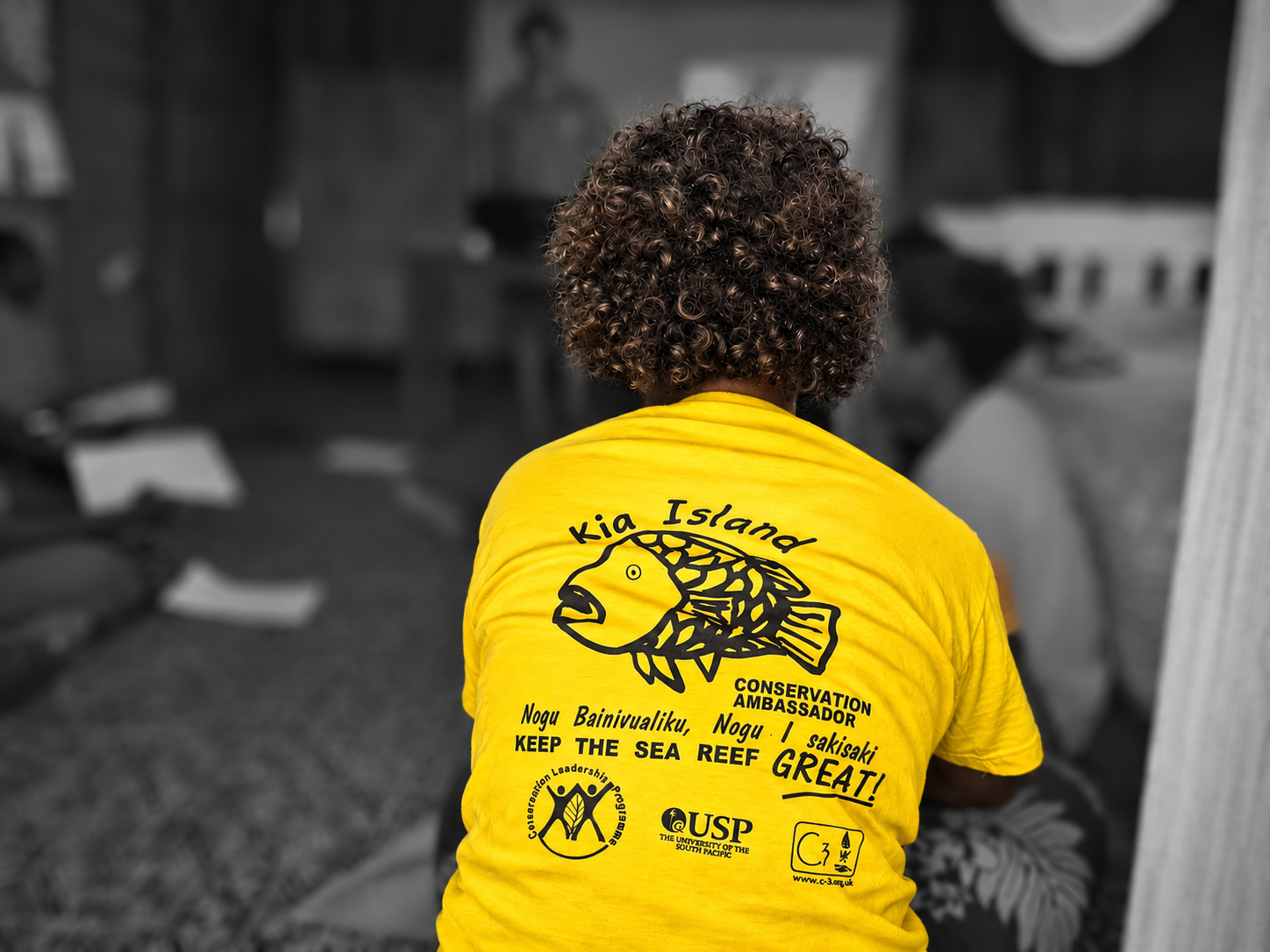
Conservation Ambassadors delivered theatrical performances and awareness activities, supported by educational posters, T-shirts and a short conservation film. A community sea turtle sighting programme was also introduced to encourage local reporting of turtle observations.
The initiative built on C3 Fiji’s existing youth and community conservation networks, extending conservation messages across Kia Island and neighbouring coastal communities.
Community-Based Marine Monitoring
Trained local Conservation Ambassadors in standardised monitoring techniques, including Reef Check, Seagrass Watch, mangrove assessment and socioeconomic monitoring.
Working alongside scientific advisers and experienced fishers, community members developed practical skills in collecting ecological information and interpreting changes in their marine environment.
Conservation Ambassadors
Established and strengthened a network of community representatives trained to support marine conservation activities, environmental monitoring and public awareness.
Conservation Ambassadors helped organise field surveys, communicate findings and encourage wider community participation in marine resource management.
Reef Rangers and Environmental Education
Developed a youth-focused environmental education programme at Kia District School, introducing children to marine ecosystems, biodiversity and conservation.
Classroom lessons were complemented by practical activities including beach clean-ups, coastal planting, habitat exploration and creative environmental awareness campaigns.
The programme encouraged young people to become active participants in protecting the marine resources on which their communities depend.
Traditional Knowledge and Community Engagement
Worked with local fishers, elders and customary resource owners to document knowledge of fishing practices, marine habitats and changes in the availability of important species.
Community consultations and participatory activities helped connect traditional knowledge with scientific research and strengthen local understanding of conservation challenges.
Environmental Awareness and Outreach
Organised community events, workshops, educational campaigns and the annual Kia Island EcoFestival.
Conservation Ambassadors and Reef Rangers produced posters, information boards, conservation materials and video diaries to communicate environmental messages across the island and beyond.
Key Results
Community Conservation Ambassadors trained
Local representatives developed skills in coral reef monitoring, seagrass surveys, mangrove assessment, socioeconomic research and environmental communication.
194 humphead wrasse landings documented
Research conducted during 2012 recorded 194 humphead wrasse landings, with detailed catch data collected for 156 individuals, providing valuable information on fishing pressure and exploitation of this endangered species.
35 humphead wrasse sightings recorded
Underwater surveys across three reef sites documented 35 sightings, contributing to assessments of species distribution and the importance of protected reef habitats.
9 communities engaged in sea turtle conservation
Awareness activities reached Naqumu, Korotubu, Yaro, Ligau, Daku, Kavewa, Lakeba, Nabuna and Baleyaganiga, supported by Conservation Ambassador performances and educational outreach.
25 key informant interviews conducted
Interviews on Kia Island gathered local knowledge and information relevant to sea turtle conservation and community awareness.
Community sea turtle sighting programme established
A reporting initiative was launched across project sites, supported by a conservation film, 300 awareness T-shirts and 200 sea turtle life-cycle posters.
70 Reef Rangers engaged
Approximately 70 young people participated in environmental education through Kia District School, developing their understanding of marine ecosystems and conservation.
8 beach clean-ups and 4 coastal planting activities
Reef Rangers and community volunteers undertook practical conservation activities across Kia Island’s three villages.
15 conservation video diaries produced
Short films documented conservation research, education activities and community perspectives, helping communicate the programme’s work to wider audiences.
International recognition
Reef Rangers reached the global finals of the 2013 UNEP/Volvo Adventure Award, recognising the young participants’ voluntary environmental conservation work.
Lasting Impact
Building Conservation Capacity Within Communities
One of the most important achievements was the development of local conservation skills and leadership.
Through practical training and participation in research, Conservation Ambassadors gained experience in monitoring marine resources and communicating conservation information within their communities.
This helped establish a model in which scientific knowledge and conservation activities were increasingly managed and communicated by local people.
Connecting Traditional Knowledge and Marine Science
The programme demonstrated the value of combining fishers’ understanding of the Great Sea Reef with scientific monitoring.
Community knowledge helped identify important habitats and fishing grounds, while ecological surveys provided additional information to support conservation planning and resource management.
This approach was subsequently extended to sea turtle conservation, using local ecological knowledge, community reporting and environmental education to encourage wider participation in protecting threatened marine species.
Developing Reef Rangers
Reef Rangers became one of the programme’s most enduring achievements.
Beginning with environmental education on Kia Island, the initiative expanded to other schools and communities across northern Fiji, encouraging young people to participate in conservation and environmental leadership.
Establishing Long-Term Community Partnerships
By working closely with traditional leaders, fishers and young people, C3 Fiji established relationships that supported subsequent conservation activities across Macuata Province.
These partnerships helped lay the foundations for later programmes addressing marine resource management, habitat restoration, climate change adaptation and community enterprise development.
The Foundations of C3 Fiji
What began as a relatively small conservation initiative on Kia Island evolved into a broader programme of community-led environmental management.
The early experience of combining scientific research, environmental education and community participation continues to inform C3 Fiji’s approach to protecting coastal and marine ecosystems.
Contact
C3 FijiFlat 3, Lot 7, Gajraj Street, Naodamu, Labasa
C3 Fiji (Community Centred Conservation (Fiji) Limited), in accordance with the Companies Act, is registered as a non-profit organization in Fiji under the Registrar of Companies with Company Registration No. RCBS2014G3314.

Building Climate Resilience of Fishing Communities
Building Climate Resilience of Fishing Communities in Macuata
USAID Pacific-American Climate Fund (PACAM) | Fiji | 2016–2018
Building Climate Resilience of Fishing Communities in Macuata
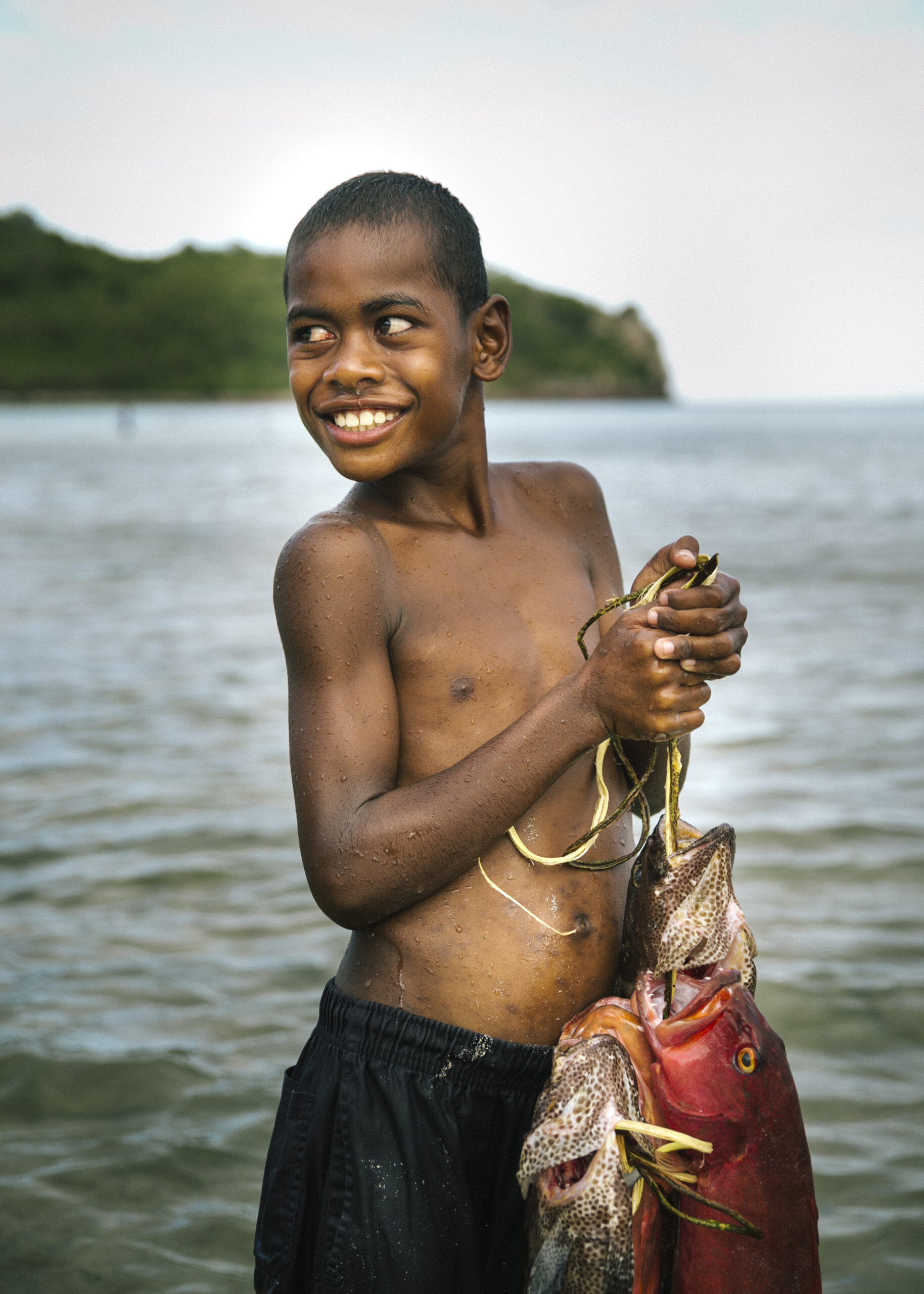
Between 2016 and 2018, C3 Fiji implemented a USAID-funded programme to strengthen the economic and environmental resilience of fishing-dependent communities in Macuata Province, northern Fiji.
Working across five project sites comprising eight coastal villages, the project supported communities to develop alternative sources of income, strengthen local enterprise skills and increase awareness of climate change and sustainable marine resource management.
A central element was the establishment of 15 community-managed enterprises, developed through participatory livelihood assessments, market research, business planning and practical training.
The programme worked closely with traditional leaders, women’s groups, young people and locally appointed Community Liaison Officers to ensure that enterprises reflected community priorities and local market opportunities.
By linking enterprise development with environmental education and community participation, the project sought to reduce economic vulnerability and strengthen communities’ capacity to respond to climate change.
Activities
Community Enterprise Development
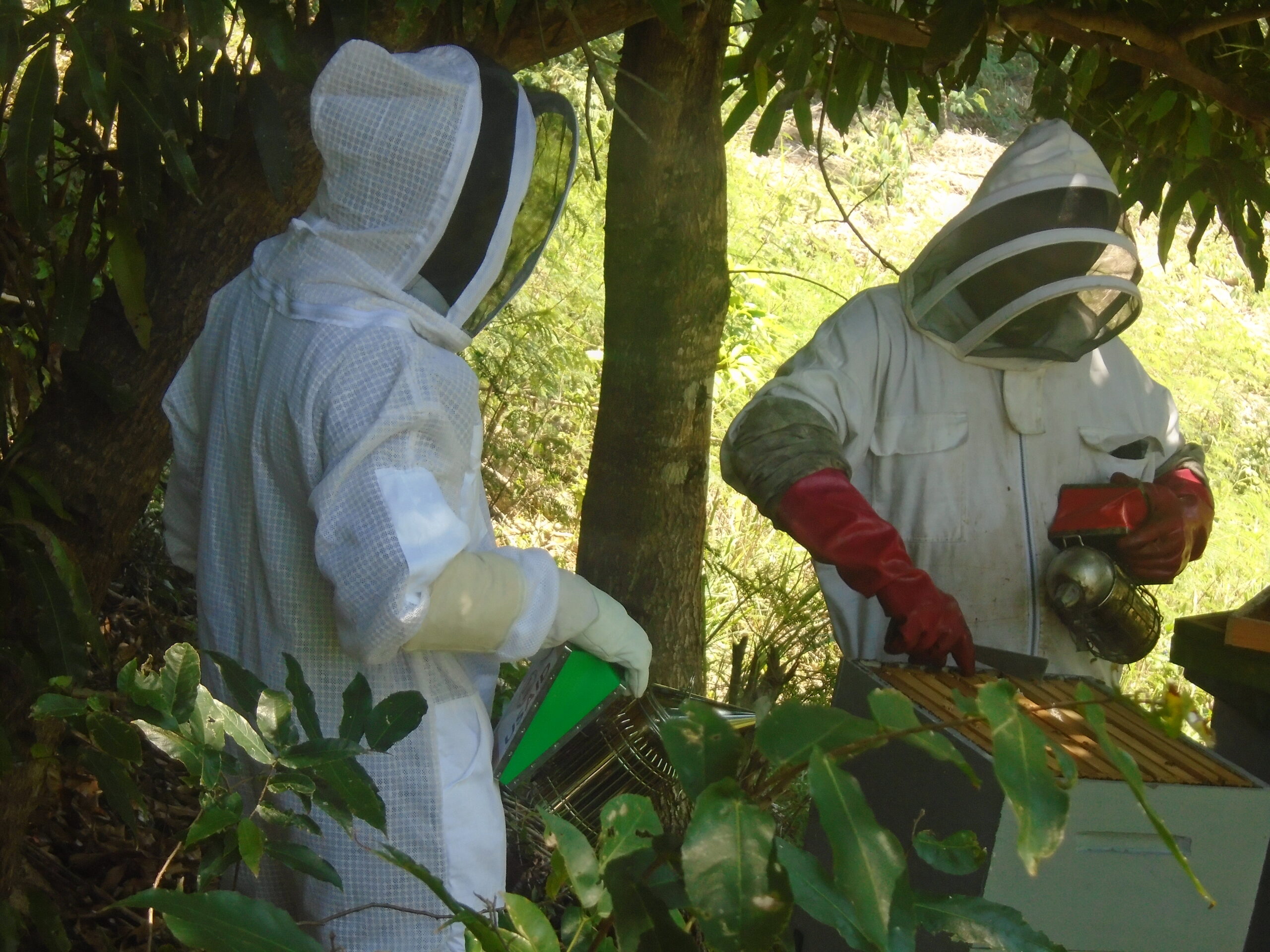
Worked with communities to identify, assess and establish alternative income-generating activities. Enterprises included beekeeping, dalo cultivation, sandalwood planting, community canteens, tailoring, screen-printing and goat farming.
Participatory feasibility assessments and market research helped communities select businesses suited to their resources, skills and economic circumstances.
Business Planning and Entrepreneurship
Delivered practical business-development training covering financial management, organisational responsibilities, marketing, business planning and enterprise operations.
Fifteen business plans were developed, with follow-up evaluations and advisory visits helping communities identify operational challenges and opportunities for improvement.
Community-Based Monitoring and Support
Recruited and trained ten Community Liaison Officers across the five project sites to support implementation, collect monitoring information, coordinate activities and maintain regular communication with community enterprises.
Socioeconomic baseline surveys were undertaken to establish information against which future livelihood outcomes could be assessed.
Climate Change Awareness and Marine Conservation
Delivered community awareness activities addressing climate change, adaptation, marine resource management and biodiversity conservation.
Topics included coral reefs, mangroves, endangered marine species, coastal pollution and practical steps communities could take to protect their natural resources.
Youth Leadership and Reef Rangers
Expanded environmental education through C3 Fiji’s Reef Rangers programme, engaging schoolchildren and young people in conservation activities.
Community-based activities included coastal clean-ups, reforestation, tree identification, composting and environmental awareness campaigns.
Community Exchange and Knowledge Sharing
Organised exchanges, consultations and feedback sessions to share business-development experiences and lessons between communities.
These activities encouraged peer learning and provided opportunities to discuss the long-term management of community enterprises.
Key Results
15 community enterprises established
Supported the implementation of 15 locally managed livelihood initiatives across five project sites, spanning agriculture, beekeeping, retail, tailoring, screen-printing and livestock production.
15 business plans developed
Completed participatory livelihood assessments and business planning for the selected enterprises, with subsequent monitoring and technical advice.
10 Community Liaison Officers trained
Community representatives supported socioeconomic monitoring, project coordination, enterprise development and local environmental awareness activities.
134 households surveyed
Socioeconomic baseline surveys were completed across the five project sites, providing information to support the assessment of future economic changes.
196 people trained in environmental communication
Social marketing and outreach training engaged Community Liaison Officers, youth leaders and young people, strengthening local capacity to organise environmental awareness activities.
662 attendances at climate and marine resource awareness sessions
Community awareness sessions covered climate adaptation, sustainable marine resource management and the conservation of threatened species and coastal habitats.
390 schoolchildren and 20 teachers engaged
Reef Rangers outreach activities introduced environmental conservation and climate change concepts through practical, participatory learning.
Community exchange and follow-up support delivered
Business monitoring, technical training and community feedback sessions helped identify enterprise challenges and opportunities for improvement.
Lasting Impact
Developing Community Entrepreneurs
The PACAM programme demonstrated how community-led enterprise development can be integrated with marine conservation and climate adaptation.
By supporting communities to assess business opportunities, prepare financial plans and manage enterprises, the project helped develop practical entrepreneurial skills in remote coastal villages.
Diversifying Economic Opportunities
The establishment of 15 community enterprises created opportunities to develop alternative income sources alongside traditional fishing activities.
The project also highlighted the importance of continued technical support, financial management and access to markets in determining whether new community enterprises succeed over the longer term.
Strengthening Local Leadership
The training of Community Liaison Officers and youth leaders established local capacity to coordinate activities, monitor progress and support environmental awareness.
Community ownership and participation were central to the project’s implementation and provided a foundation for future initiatives.
Connecting Enterprise Development and Conservation
Through Reef Rangers and wider awareness activities, the project reinforced the relationship between healthy marine ecosystems, food security and community well-being.
The programme encouraged communities to view conservation and enterprise development as complementary components of climate resilience.
Lessons for Future Blue Economy Initiatives
PACAM provided C3 Fiji with valuable experience in assessing, establishing and supporting community-owned businesses.
An important lesson was that enterprise development requires sufficient time for community consultation, business planning, implementation, monitoring and ongoing support.
These experiences remain directly relevant to the development of community enterprises and conservation-linked investment opportunities across the C3 Network.
Contact
C3 FijiFlat 3, Lot 7, Gajraj Street, Naodamu, Labasa
C3 Fiji (Community Centred Conservation (Fiji) Limited), in accordance with the Companies Act, is registered as a non-profit organization in Fiji under the Registrar of Companies with Company Registration No. RCBS2014G3314.
Increasing Climate Change Resilience in Coastal Communities
Increasing Climate Change Resilience in Remote Coastal Communities of Macuata and Cakaudrove ProvinceEuropean Union | Fiji | 2020–2024
Increasing Climate Change Resilience in Remote Coastal Communities of Macuata and Cakaudrove Province
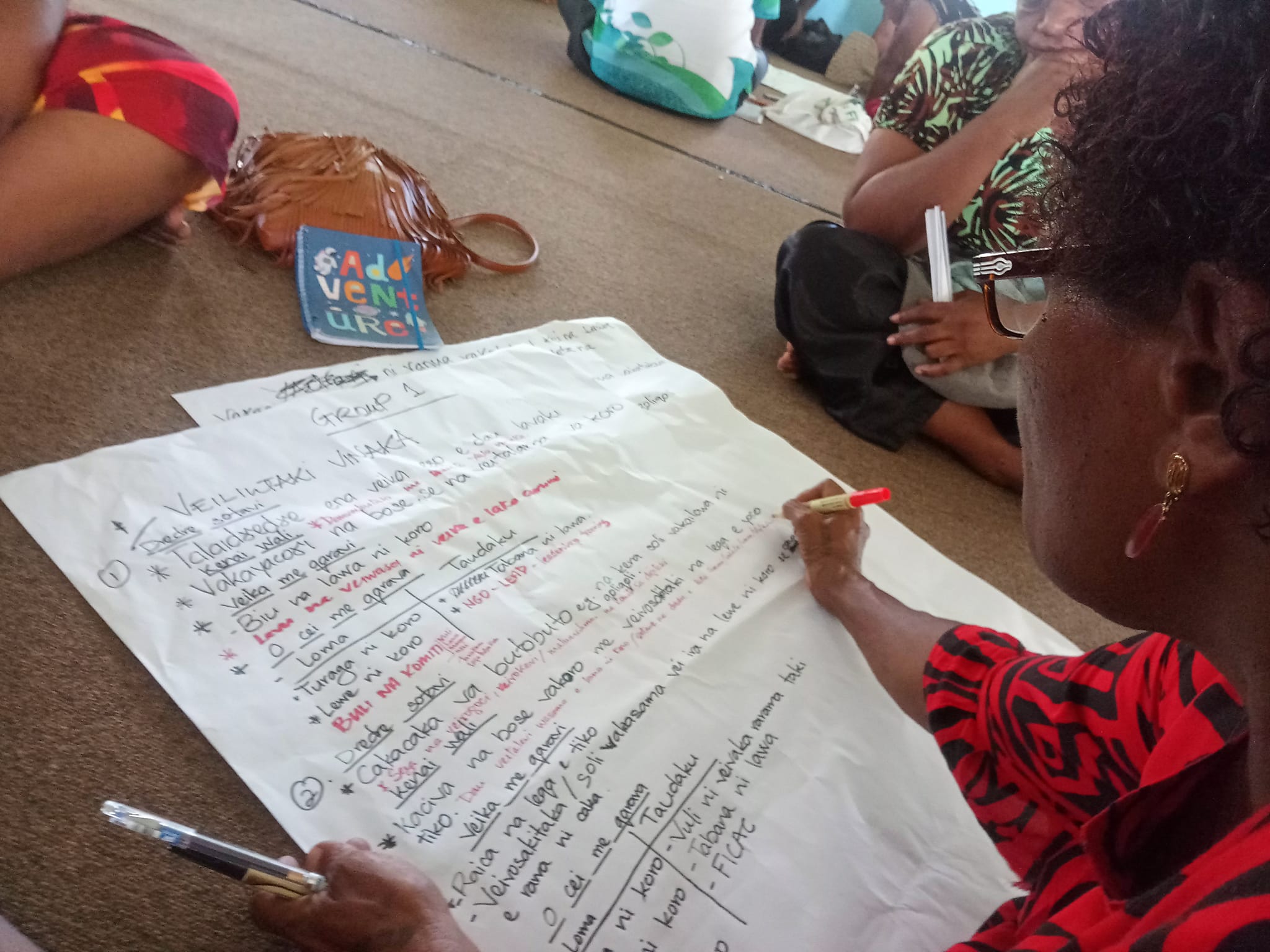
Between 2020 and 2024, C3 Fiji implemented a European Union-funded programme to strengthen climate resilience across 15 remote coastal communities in Macuata and Cakaudrove Provinces, northern Fiji.
The €444,848 programme combined terrestrial and marine ecosystem restoration, community-based resource management, environmental education and practical climate adaptation measures.
Working alongside local communities, traditional leaders and government ministries, C3 Fiji supported the restoration of degraded native forests and mangroves, the establishment of community-managed conservation areas and the training of local resource managers.
A central feature of the project was its emphasis on community ownership. By integrating scientific knowledge with customary resource management practices, the programme aimed to equip communities with the skills and structures needed to protect their natural resources beyond the project period.
Activities
Native Forest Restoration and Protection
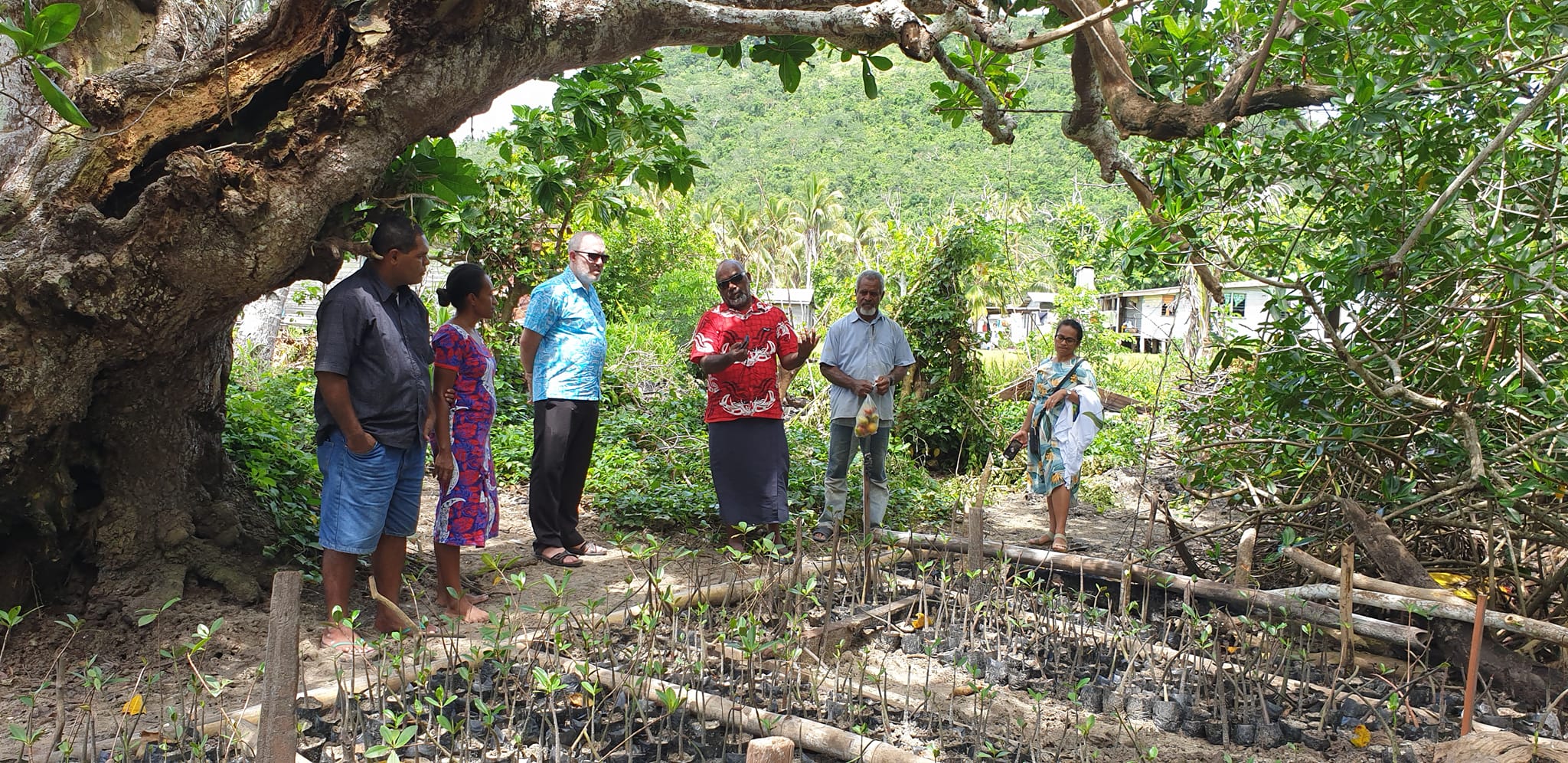
Worked with communities and Fiji’s Ministry of Forestry to establish native tree nurseries, identify degraded forest areas and restore indigenous vegetation. Activities included seedling production, planting, survival monitoring, community forest reserve establishment and training local Forest Wardens.
Mangrove Restoration and Coastal Conservation
Supported community-led mangrove restoration through nursery development, propagule planting and regular monitoring. Communities received training in mangrove ecology, conservation and restoration techniques, helping strengthen the protection of coastal habitats and blue carbon ecosystems.
Locally Managed Marine Areas
Supported the establishment and strengthening of Locally Managed Marine Areas (LMMAs), working with traditional resource owners to map marine areas, prepare management plans and develop locally appropriate conservation measures. Fish Warden training strengthened community capacity to monitor fisheries and address illegal or unsustainable fishing practices.
Reef Rangers and Environmental Education
Expanded C3 Fiji’s Reef Rangers programme to engage young people in climate change awareness, biodiversity conservation and practical environmental action. Community-based activities, training sessions and outreach events encouraged youth participation and helped develop a new generation of local conservation leaders.
Fuel-Efficient Cooking Technologies
Introduced locally appropriate fuel-efficient cooking stoves to reduce household dependence on firewood. Women received practical training in stove assembly, operation and maintenance, supporting more efficient cooking practices and reducing pressure on native forests.
Community Engagement and Capacity Building
Delivered awareness events, consultations and practical training in collaboration with communities, provincial authorities and government ministries. Activities combined local knowledge, technical expertise and participatory decision-making to strengthen community stewardship of marine and terrestrial ecosystems.
Key Results
15 coastal communities supported
The programme worked across Macuata and Cakaudrove Provinces, strengthening community participation in conservation and climate adaptation.
23,000 indigenous trees planted
Native tree restoration covered approximately 28 hectares across community sites. Monitoring recorded 12,181 surviving indigenous trees, representing approximately 53% survival. An additional 1,500 coconut seedlings were planted.
10,355 mangroves planted
Mangrove restoration activities covered approximately eight hectares across nine planting sites, with 7,326 surviving plants recorded — a 71% survival rate.
11 community-managed forest reserves established
Participatory mapping, management planning and local governance arrangements supported the establishment of forest reserves, with 23 Forest Wardens trained to support their protection.
8 Locally Managed Marine Areas established
Community-led marine conservation areas were established with management plans developed through consultations with traditional resource owners and local stakeholders.
45 Fish Wardens trained
Training delivered in collaboration with government partners strengthened local capacity for fisheries monitoring, resource protection and enforcement.
1,582 young people recruited as Reef Rangers
The Reef Rangers programme expanded across 45 communities and two schools, engaging young people in environmental education and conservation activities.
41 community outreach events delivered
Awareness activities addressed climate change, biodiversity conservation, ecosystem services and sustainable natural resource management.
233 women trained in fuel-efficient stove technology
Women received practical training in assembling, operating and maintaining fuel-efficient cooking stoves, supporting household adaptation and reduced dependence on firewood.
Independent Final Evaluation
An independent final evaluation conducted by Pacific Climate Consulting assessed the project’s relevance, effectiveness, impact, sustainability and integration of gender equality.
The evaluation recognised the programme’s strong community-led approach and its contribution to local conservation capacity, environmental awareness and the protection of natural resources.
It highlighted the importance of working through existing community structures, particularly traditional leaders, community liaison officers and local resource-management committees. These relationships helped build community ownership and strengthen the acceptance of conservation activities.
The evaluation also recognised C3 Fiji’s ability to adapt project delivery in response to COVID-19 restrictions, tropical cyclones and administrative delays, including shifting environmental education activities from schools into communities.
Close collaboration with government ministries and provincial authorities was identified as a particular strength, alongside the project’s emphasis on inclusive participation and practical capacity building.
The evaluation concluded that the programme offered valuable lessons for community-led climate adaptation and conservation initiatives elsewhere in the Pacific.
Lasting Impact
Building Community Ownership
The establishment of marine and forest management areas, together with the training of Fish Wardens, Forest Wardens and community representatives, has strengthened local structures for managing natural resources.
By working within customary governance systems and involving resource owners in planning and decision-making, the programme established a foundation for continued community stewardship.
Restoring Forests and Coastal Ecosystems
The restoration of native trees and mangroves has helped rehabilitate degraded habitats while developing community experience in nursery management, planting and ecological monitoring.
Continued maintenance and monitoring remain important to securing longer-term ecological benefits, particularly where planting success was affected by extreme weather and competing land uses.
Investing in the Next Generation
The expansion of Reef Rangers has created opportunities for young people to participate directly in conservation and climate adaptation. These experiences help develop local environmental knowledge and leadership that can extend beyond individual projects.
Continuing Conservation Beyond EU Funding
An important legacy of the EU programme was the continuation of conservation work through subsequent initiatives.
The Kiwa Initiative built on existing relationships and restoration activities in northern Vanua Levu, particularly in Raviravi, Naividamu and Qaranivai, allowing communities to further strengthen mangrove conservation, locally managed marine areas and nature-based approaches to climate adaptation.
This continuity demonstrates the value of sustained partnerships and long-term engagement with communities, rather than isolated short-term interventions.
Contact
C3 FijiFlat 3, Lot 7, Gajraj Street, Naodamu, Labasa
C3 Fiji (Community Centred Conservation (Fiji) Limited), in accordance with the Companies Act, is registered as a non-profit organization in Fiji under the Registrar of Companies with Company Registration No. RCBS2014G3314.
Restoring Mangroves for Livelihoods
Using Nature-Based Solutions to Protect Coastal Communities from the Negative Impacts of Climate Change in Northern Vanua Levu, FijiKiwa Initiative / IUCN | 2022–2026
Restoring Mangroves for Livelihoods
C3 Fiji implemented a community-led mangrove conservation and restoration project in Macuata Province, northern Vanua Levu, supported by the Kiwa Initiative.
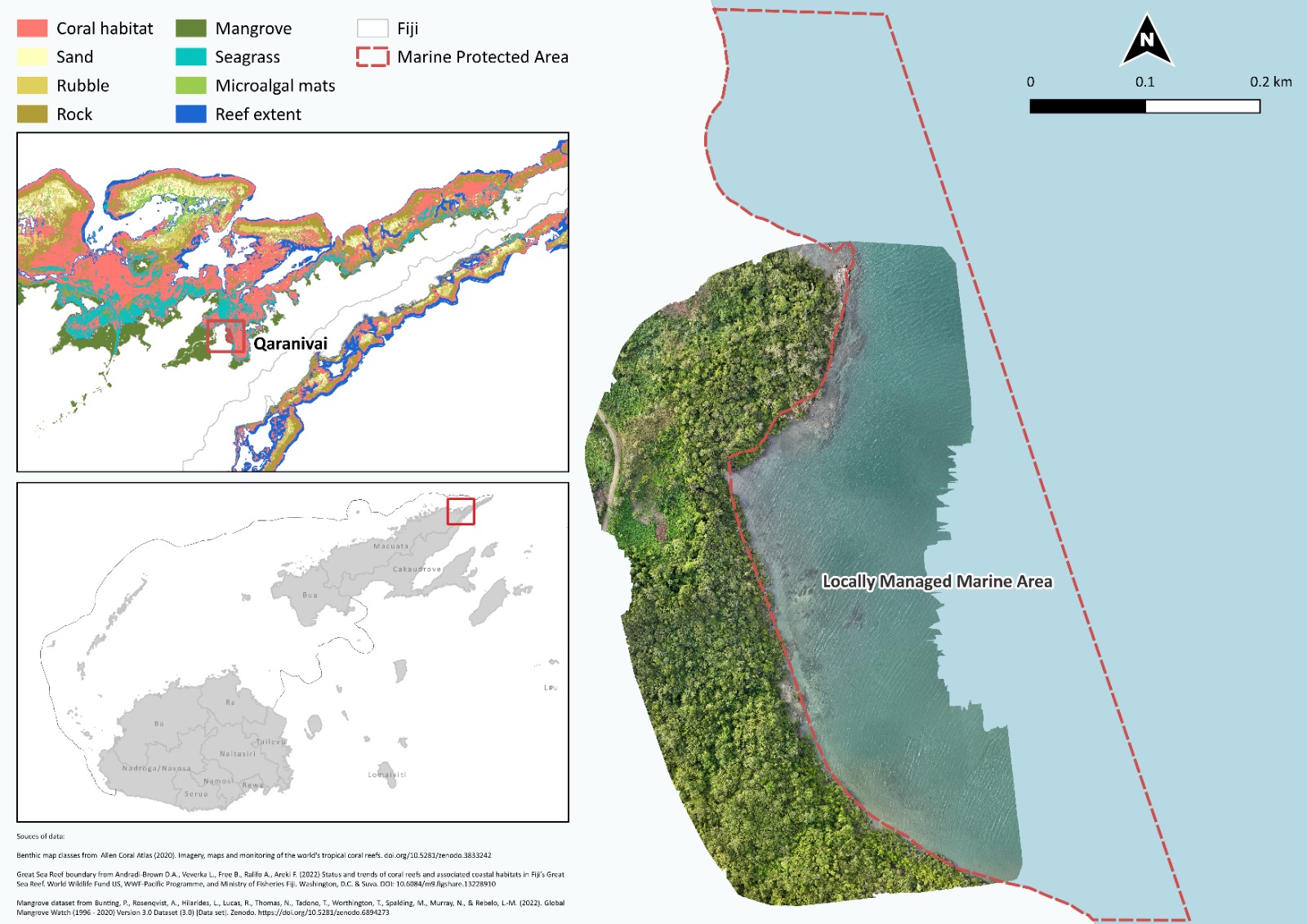
Working with communities in Raviravi, Naividamu and Qaranivai, the project strengthened coastal resilience through mangrove restoration, locally managed marine areas (LMMAs), environmental education and opportunities for mangrove-related livelihoods.
The project responded to growing coastal threats, including erosion, tidal flooding and increasingly severe weather events. It combined practical restoration with community-based resource management, helping local communities protect mangrove ecosystems while strengthening their capacity to adapt to climate change.
With funding of approximately €200,000, the project placed particular emphasis on community participation, youth engagement and establishing the foundations for long-term mangrove management.
Activities
Locally Managed Marine Areas and Community Governance
Reviewed, mapped and strengthened mangrove-dominated Locally Managed Marine Areas (LMMAs) in Naividamu, Raviravi and Qaranivai. Activities included ecological assessments, participatory mapping, management planning, community consultations and training to strengthen local governance and marine resource management.
Mangrove Restoration and Monitoring
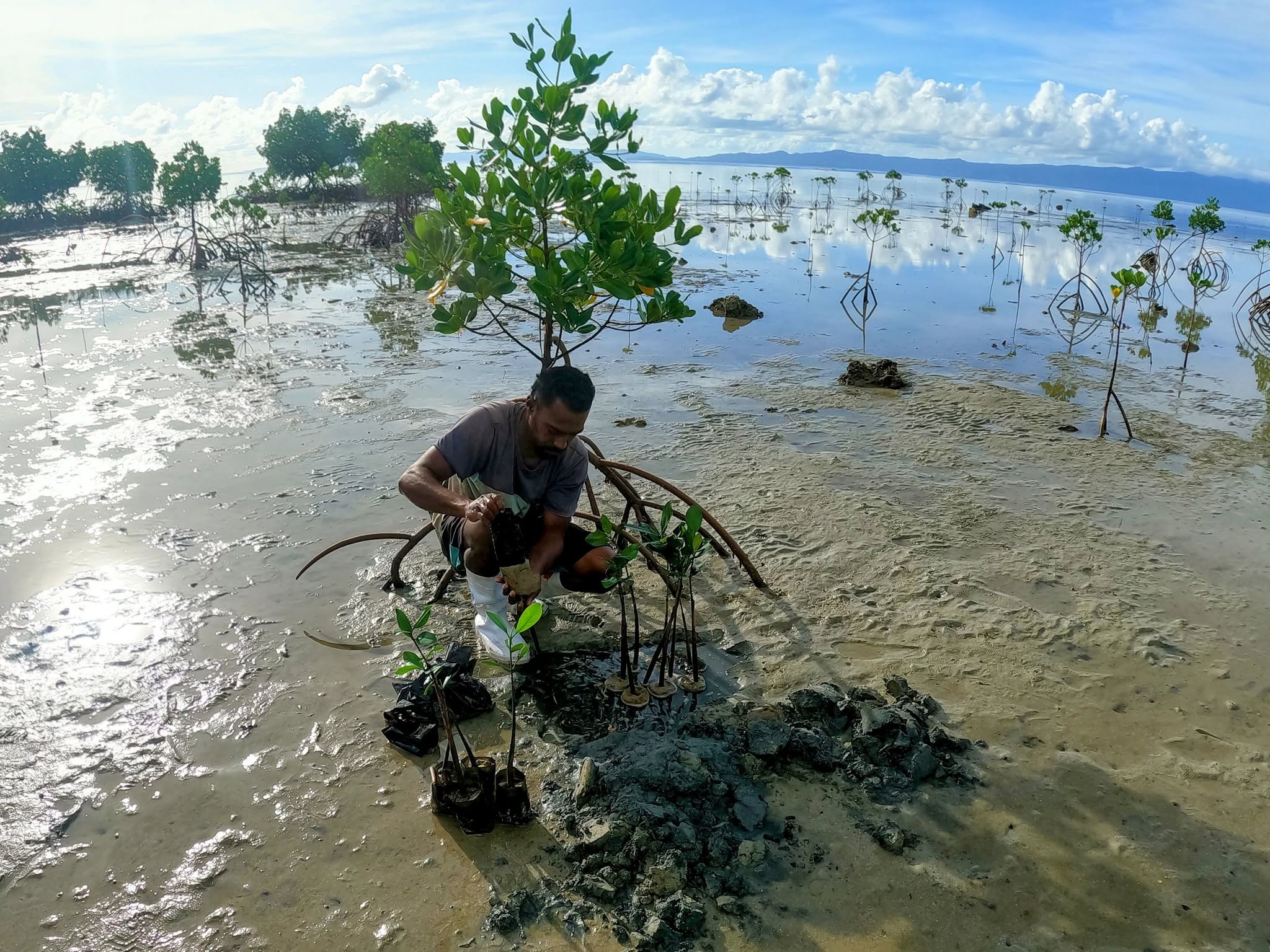
Established community-managed mangrove nurseries, collected and cultivated propagules, and restored degraded coastal habitats. Regular monitoring assessed planting success and informed improvements in nursery management, site selection and restoration techniques.
Environmental Education and Community Awareness
Developed bilingual awareness materials and organised community outreach activities highlighting the importance of mangroves for coastal protection, biodiversity, fisheries and climate resilience. Activities engaged schools, traditional leaders, women’s groups and local communities.
Youth Leadership and Conservation Ambassadors
Worked with Reef Rangers youth groups and trained community Conservation Ambassadors in mangrove ecology, environmental communication and community engagement. Participants helped lead restoration activities, awareness events and conservation outreach.
Community Enterprise and Climate Adaptation
Conducted community consultations to identify practical opportunities for improving livelihoods while reducing pressure on mangrove ecosystems. Potential innovations included renewable-energy technologies and improved fish storage, with solar-powered refrigeration prioritised for further development.
Key Results
3 Locally Managed Marine Areas strengthened
Mangrove-dominated LMMAs in Naividamu, Raviravi and Qaranivai were mapped, assessed and strengthened through participatory management planning, community consultations and improved governance arrangements. Each covered at least 10 hectares.
44,231 mangrove propagules produced or directly planted
Community nurseries raised 41,484 mangrove propagules, with a further 2,747 planted directly at restoration sites.
18,261 mangrove plants successfully established
Restoration activities established mangroves in degraded coastal habitats. Regular monitoring and improvements to nursery management, site selection and planting techniques supported restoration success.
More than 1,600 people reached
Community awareness activities engaged schools, youth groups, women’s groups, traditional leaders and other residents, increasing awareness of mangrove conservation and climate adaptation.
14 Conservation Ambassadors appointed
Fourteen community Conservation Ambassadors were appointed across the three project sites, with 13 completing formal training in mangrove ecology and environmental communication.
More than 40 community members trained in ecosystem monitoring
Practical biodiversity monitoring and ecosystem management training strengthened local capacity to assess mangroves, seagrass and coral reefs and support adaptive LMMA management.
Community enterprise opportunities identified
Consultations identified practical livelihood innovations, including solar-powered refrigeration to improve fish storage and support coastal enterprises.
Lasting Impact
Community-Led Mangrove Conservation
The Kiwa Initiative has strengthened the foundations for long-term mangrove conservation in northern Vanua Levu by supporting community ownership, improved governance and practical management of locally managed marine areas.
Through participatory planning and training, communities in Naividamu, Raviravi and Qaranivai are better equipped to manage and protect their coastal ecosystems.
Restoring Coastal Ecosystems
The establishment of community mangrove nurseries and restoration activities has created local capacity to continue rehabilitating degraded coastal habitats.
Improved propagation, planting and monitoring techniques provide a foundation for future mangrove recovery and the protection of important coastal ecosystem services.
Developing Local Conservation Leadership
Training Conservation Ambassadors and engaging Reef Rangers has helped establish a network of community members and young people with the skills to promote conservation and encourage wider participation.
These local champions can continue supporting environmental awareness, monitoring and restoration beyond the project period.
Strengthening Climate Resilience
By combining mangrove restoration, locally managed marine areas, environmental education and community enterprise development, the project has established practical foundations for nature-based climate adaptation.
Continued community stewardship, ecological monitoring and investment will be important to sustaining these achievements and translating them into long-term improvements in coastal resilience.
Contact
C3 FijiFlat 3, Lot 7, Gajraj Street, Naodamu, Labasa
C3 Fiji (Community Centred Conservation (Fiji) Limited), in accordance with the Companies Act, is registered as a non-profit organization in Fiji under the Registrar of Companies with Company Registration No. RCBS2014G3314.
Investing in Coral Reefs and the Blue Economy (ICRBE)
Investing in Coral Reefs and the Blue Economy (ICRBE)
UNDP Fiji / UNEP / Global Fund for Coral Reefs | 2025–2026
Investing in Coral Reefs and the Blue Economy (ICRBE)
C3 Fiji is supporting the Investing in Coral Reefs and the Blue Economy (ICRBE) programme, strengthening community-led marine conservation and sustainable resource management across Fiji.
Working across ten coastal communities on Vanua Levu and Viti Levu, the project combines coral reef and fisheries assessments, community engagement and capacity building to improve marine resource management and support reef-positive economic opportunities.
The work provides an ecological evidence base for conservation planning, helps communities identify priorities for managing their marine resources and supports the development of locally appropriate blue economy initiatives.
Project locations: Kia, Qaranivai, Raviravi, Tavea and Galoa (Vanua Levu); Malake, Vunitogoloa, Tavualevu, Nailaga and Sanasana (Viti Levu).
Activities
Coral Reef and Fish Surveys
Conducted ecological assessments across ten coastal sites in Fiji, documenting live coral cover, reef condition, fish abundance and biomass. These surveys provide baseline information to support evidence-based marine resource management.
Locally Managed Marine Areas
Worked with coastal communities to strengthen the management of locally managed marine areas (LMMAs), using ecological evidence and community priorities to inform conservation and fisheries management.
Community Engagement and Capacity Building
Supported community participation in marine resource management through consultations, practical training and knowledge sharing, strengthening local capacity to assess and manage coastal ecosystems.
Reef-Positive Livelihoods and Blue Economy Opportunities
Supported the identification of sustainable fisheries and marine enterprise opportunities that can improve coastal livelihoods while reducing pressures on coral reef ecosystems.
Key Results
10 coastal communities surveyed
Coral reef and fish assessments completed across five communities on Vanua Levu and five on Viti Levu, establishing ecological baselines to support marine resource management.
326 practitioners trained
Capacity building strengthened practical skills and knowledge relevant to marine ecosystem assessment and management.
12.1–46.5% mean hard coral cover
Mean hard coral cover varied considerably between survey locations, from 12.09% at Sanasana to 46.45% at Qaranivai. Other sites with relatively high coral cover included Nailaga (45.90%), Tavea (42.62%) and Galoa (41.69%).
5.7–520.7 kg/ha mean reef fish biomass
Fish biomass also varied substantially, from 5.66 kg/ha at Nailaga to 520.74 kg/ha at Qaranivai. Raviravi recorded 350.82 kg/ha, while Galoa recorded 209.22 kg/ha.
Evidence for locally managed marine areas
The assessments provide site-specific information on reef condition and fish populations, helping communities and conservation partners identify priorities for fisheries management, protection and future monitoring.
Lasting Impact
Strengthening Community-Led Reef Management
The ICRBE programme is helping coastal communities across Fiji make more informed decisions about the management of their marine resources.
By combining ecological assessments with community engagement and practical training, the project establishes a foundation for longer-term conservation and sustainable fisheries management.
An Evidence Base for Conservation
The coral reef and fish surveys provide valuable baseline information against which future changes in reef condition and fish populations can be measured.
These findings can help communities and conservation partners assess management effectiveness, identify conservation priorities and develop targeted interventions.
Building Local Capacity
Training 326 practitioners has strengthened local technical capacity to support marine resource assessment and management, helping to establish the skills needed for continued monitoring and adaptive management.
Supporting Reef-Positive Investment
The programme also provides a foundation for identifying sustainable marine enterprises and potential financing opportunities that can support both community livelihoods and coral reef conservation.
Through the wider C3 Network, these opportunities may contribute to the development of investment-ready projects under C3 Blue Finance Solutions.
Contact
C3 FijiFlat 3, Lot 7, Gajraj Street, Naodamu, Labasa
C3 Fiji (Community Centred Conservation (Fiji) Limited), in accordance with the Companies Act, is registered as a non-profit organization in Fiji under the Registrar of Companies with Company Registration No. RCBS2014G3314.