
Assessing the Poverty Impacts of Marine Conservation Programmes
NIRAS, supporting the UK Department for Environment, Food and Rural Affairs (DEFRA) | 2025
Project Overview
Marine conservation programmes are increasingly expected to deliver benefits for both biodiversity and the communities that depend on healthy marine ecosystems. However, demonstrating how investments in marine science, environmental protection and technical assistance translate into measurable improvements in livelihoods and wellbeing remains a major challenge.
The Ocean Country Partnership Programme (OCPP), funded by the UK Government through Defra’s Blue Planet Fund, provides technical assistance to partner countries to improve the sustainable management of marine biodiversity, fisheries and pollution.
NIRAS was commissioned to provide independent monitoring, evaluation and learning services for the programme, including assessing whether interventions were contributing to poverty reduction and identifying approaches to measuring these impacts.
C3 International was contracted by NIRAS to provide specialist marine science advisory services, supporting the assessment of potential poverty reduction pathways associated with marine conservation interventions.
The consultancy initially examined marine conservation and socioeconomic impacts through desk-based assessment, including work concerning the Maldives and Mozambique. Its scope was subsequently extended to examine the NetCYCLE Africa initiative in Ghana, with responsibilities covering evaluation design, stakeholder interviews, evidence analysis and reporting.
The work contributed to a broader effort to establish whether improvements in marine environmental management were generating tangible benefits for coastal communities, particularly poorer and marginalised groups.
Activities
Assessing Marine Conservation and Poverty Reduction
C3 International examined potential links between marine environmental management, poverty alleviation and community wellbeing.
The work considered marine protected areas, fisheries management, sustainable tourism and marine pollution interventions, investigating how environmental improvements might generate direct or indirect socioeconomic benefits.
Particular attention was given to identifying the communities most likely to benefit, distinguishing short-term outcomes from longer-term effects, and identifying credible indicators of changes in income, livelihoods, resource access and wellbeing.
Desk-based assessments covering the Maldives and Mozambique examined opportunities to integrate socioeconomic evidence into marine conservation programme evaluations.
Marine Pollution and Livelihoods in Ghana
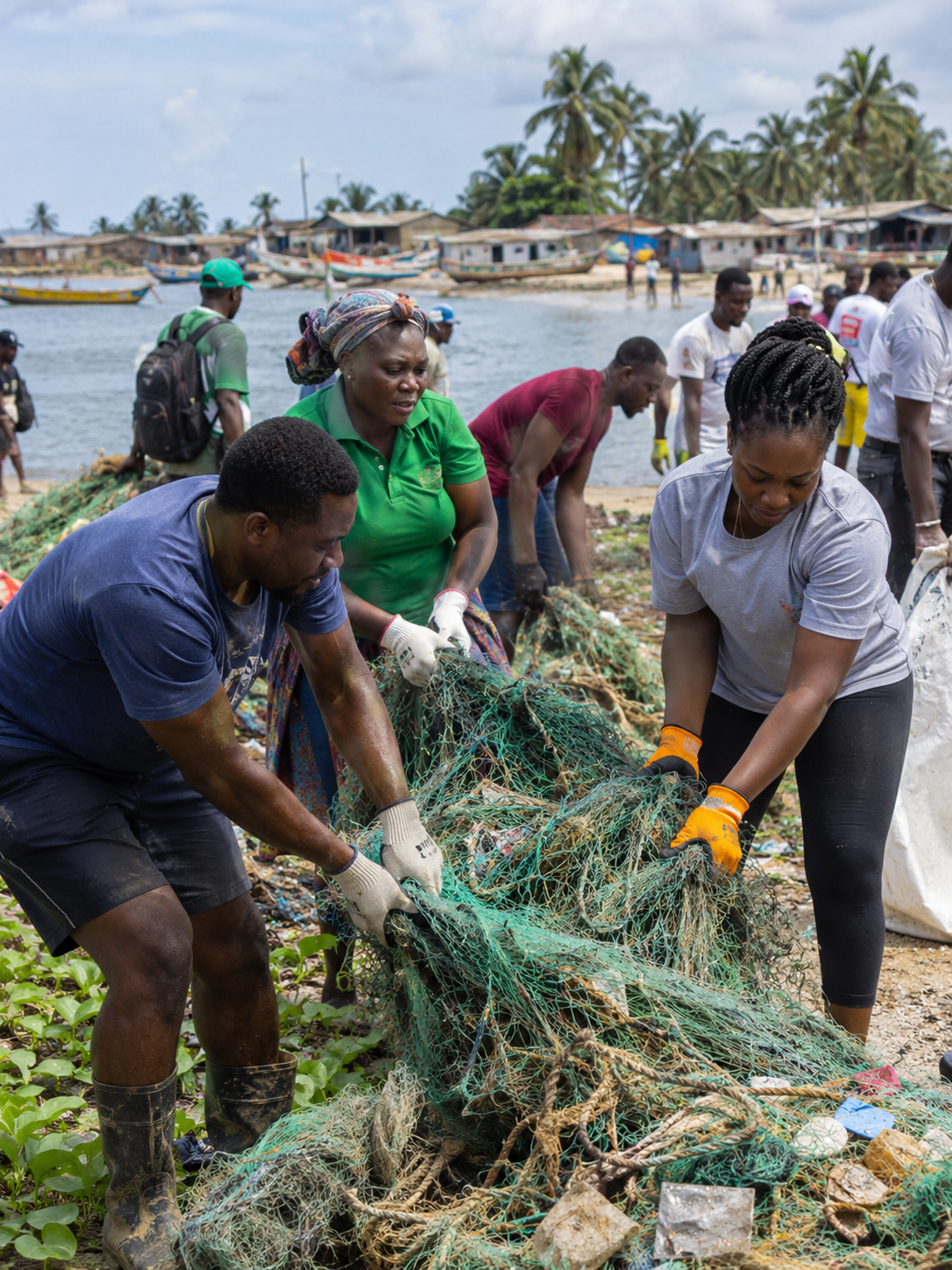
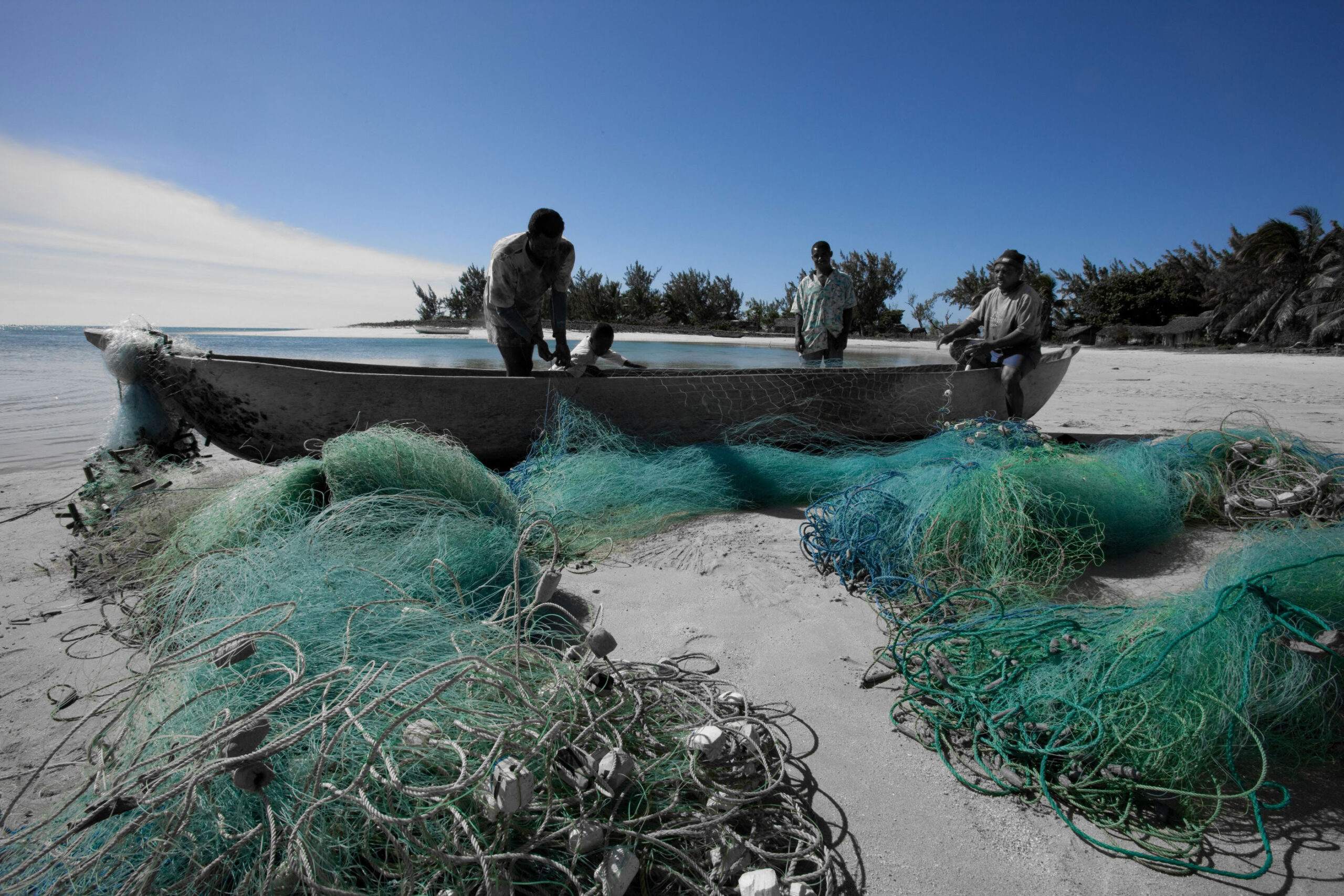
The consultancy was extended to support assessment of NetCYCLE Africa, an initiative implemented by CHAiNT AFRIQUE to address abandoned, lost and discarded fishing gear.
NetCYCLE works with coastal fishing communities and communities around Lake Volta to reduce fishing-gear pollution, encourage responsible disposal and develop opportunities for collecting and recycling discarded nets.
Through OCPP support, the initiative expanded awareness activities and net buy-back arrangements, providing opportunities to explore how marine pollution reduction could contribute to local livelihoods.
Programme reporting documented the recovery of approximately 2,000 kg of fishing nets during a 2024 outreach campaign and the addition of 20 communities to buy-back schemes.
The programme also supported provision of two net-baling machines to improve the efficiency of transporting collected nets to recycling facilities.
C3 International’s evaluation role focused on investigating whether such activities could generate demonstrable socioeconomic benefits for participating communities, and on developing approaches to assess the contribution of the intervention to observed changes.
Evaluating Sustainable Aquaculture and Community Benefits
The wider OCPP poverty alleviation case study also examined Ghana’s Blue Food Partnership, an initiative led through the World Economic Forum’s Friends of Ocean Action.
The partnership established a multi-stakeholder platform involving 49 members and developed an action plan promoting responsible aquaculture production, improved livelihoods, healthy consumption and a stronger enabling environment.
The evaluation considered potential livelihood pathways associated with aquaculture, including employment conditions, women’s participation, fish processing and small-scale enterprise development.
Examples included women-led training and opportunities to produce value-added products from farmed fish, potentially creating additional income opportunities beyond primary aquaculture production.
These initiatives provided useful comparative examples for assessing how blue-economy interventions might contribute to inclusive economic development.
Developing Participatory Impact Assessment Methods
The wider evaluation team selected a Participatory Impact Assessment approach to investigate changes experienced by communities and identify the contribution of OCPP-supported interventions.
The approach addressed three central questions:
- What changes have occurred in communities since the interventions began?
- To what extent can those changes be attributed to, or linked with, the interventions?
- What difference have those changes made to people’s lives?
The methodology combined review of programme evidence with stakeholder consultation, focus group discussions and key informant interviews.
It adopted a multidimensional understanding of wellbeing, considering material circumstances alongside social relationships and people’s perceptions of their quality of life.
For the NetCYCLE assessment, C3 International’s contracted responsibilities included developing data collection tools, conducting interviews, analysing evidence and contributing to reporting.
Strengthening Evaluation Frameworks
The consultancy also examined approaches to measuring the socioeconomic outcomes of marine protected areas and other conservation interventions.
These included the potential integration of the IUCN Protected Areas Benefits Assessment Tool (PA-BAT+) with the Management Effectiveness Tracking Tool (METT), allowing assessments to consider community benefits alongside protected area management performance.
A central emphasis was establishing realistic pathways through which technical assistance and improvements in environmental governance could ultimately benefit coastal communities.
Key Results
The assignment contributed marine science expertise to the development of a more rigorous approach for assessing the poverty alleviation potential of marine conservation programmes.
Key contributions included:
- Desk-based assessment of potential socioeconomic benefits associated with marine conservation interventions in the Maldives and Mozambique.
- Identification of potential livelihood and wellbeing indicators, beneficiary groups and appropriate approaches to collecting socioeconomic evidence.
- Specialist evaluation support for Ghana’s NetCYCLE Africa intervention, examining potential links between fishing-net recovery, recycling incentives and community livelihoods.
- Contribution to a wider evaluability assessment that identified three interventions for more detailed poverty-related investigation: abandoned and discarded fishing gear in Sri Lanka, NetCYCLE Africa in Ghana and the Blue Food Partnership in Ghana.
- Development of approaches to assessing whether observed socioeconomic changes could plausibly be linked to marine environmental interventions.
- Consideration of how socioeconomic monitoring could be integrated with marine conservation programme evaluation and management.
The assessment drew upon reported results from OCPP-supported initiatives, including fishing-net recovery, waste-management infrastructure, aquaculture partnerships and women’s livelihood initiatives.
These examples illustrated potential pathways to poverty reduction but also highlighted the importance of independently establishing whether benefits had reached intended communities.
Lasting Impact
The assignment addressed a fundamental challenge in international marine conservation: demonstrating that improvements in environmental management result in meaningful and equitable benefits for people.
It highlighted that successful delivery of technical assistance, stronger institutional capacity or improved marine environmental management cannot automatically be treated as evidence of poverty reduction.
Measuring such impacts requires appropriate socioeconomic baselines, engagement with affected communities, credible evaluation methods and consideration of the time required for environmental improvements to translate into social and economic outcomes.
The work also demonstrated opportunities for linking marine pollution reduction and circular-economy initiatives to community livelihoods, while identifying the need for stronger evidence on the distribution and sustainability of those benefits.
By contributing specialist marine science and socioeconomic evaluation expertise to NIRAS’s wider assessment, C3 International supported efforts to strengthen the evidence base for conservation investments and their potential contribution to poverty alleviation.
The assignment demonstrates C3 International’s ability to work at the intersection of marine science, environmental governance, community livelihoods and international development evaluation.
Contact:
Work with C3 International
We welcome enquiries from governments, international organisations, NGOs, research institutions and private-sector partners seeking specialist expertise in marine and coastal environments.
Whether you are developing a new project, seeking technical advice or exploring opportunities for sustainable blue finance, we’d be pleased to discuss potential collaborations.
C3 International Limited is registered as a Limited Company in England and Wales, registration number 11233261