Palawan Blue Carbon Mangrove Restoration and Investment Platform
Palawan, Philippines | Mangrove Restoration, Blue Carbon and Conservation Finance
Project Overview
Mangrove forests are among the world’s most valuable coastal ecosystems, supporting biodiversity, fisheries, coastal protection and carbon storage. However, extensive areas have been degraded through aquaculture development, land conversion and unsustainable resource extraction.
The Palawan Blue Carbon Mangrove Restoration and Investment Platform aims to develop a community-led approach to restoring degraded mangrove ecosystems while exploring opportunities for long-term conservation finance.
The initiative builds on a comprehensive feasibility study undertaken by C3 International in 2023, which identified approximately 2,000 hectares of severely degraded mangrove areas across Palawan with potential for rehabilitation.
In 2026, C3 Philippines, with technical support from C3 International, advanced the initiative through the World Economic Forum’s Blue Carbon Action Partnership (BCAP) Small Grants Programme. This phase focused on priority restoration areas in Barangays Rizal and Malcampo, Municipality of Roxas.
The programme combines ecological assessment, community partnerships, restoration planning, land-tenure due diligence and carbon finance expertise to establish the foundations for a potentially scalable blue carbon investment model.
Activities
Mangrove mapping and feasibility assessment
C3 International’s 2023 feasibility study combined remote sensing, GIS, biodiversity research, carbon-stock information and field investigations to identify mangrove restoration opportunities across Palawan.
The assessment examined historical changes in forest cover, mangrove degradation, aquaculture pond distribution and potential rehabilitation pathways. It identified approximately 2,000 hectares of severely degraded mangrove areas, together with a wider landscape of moderately degraded forests and more than 2,300 hectares of mapped aquaculture ponds.
These findings provided the initial evidence base for identifying promising restoration opportunities, while recognising that ecological potential must be distinguished from legal, technical and financial feasibility.
Community engagement and partnerships
During the BCAP-supported phase in 2026, C3 Philippines engaged more than 70 stakeholders, including local government representatives, barangay councils, government environmental agencies, community organisations and residents.
Formal Memoranda of Agreement were established with Barangays Rizal and Malcampo to support continued cooperation on mangrove conservation, ecological assessment, restoration planning and community participation.
The project also undertook conservation education and awareness activities during the Panalaminan Mangrove Festival.
Ecological surveys and restoration planning
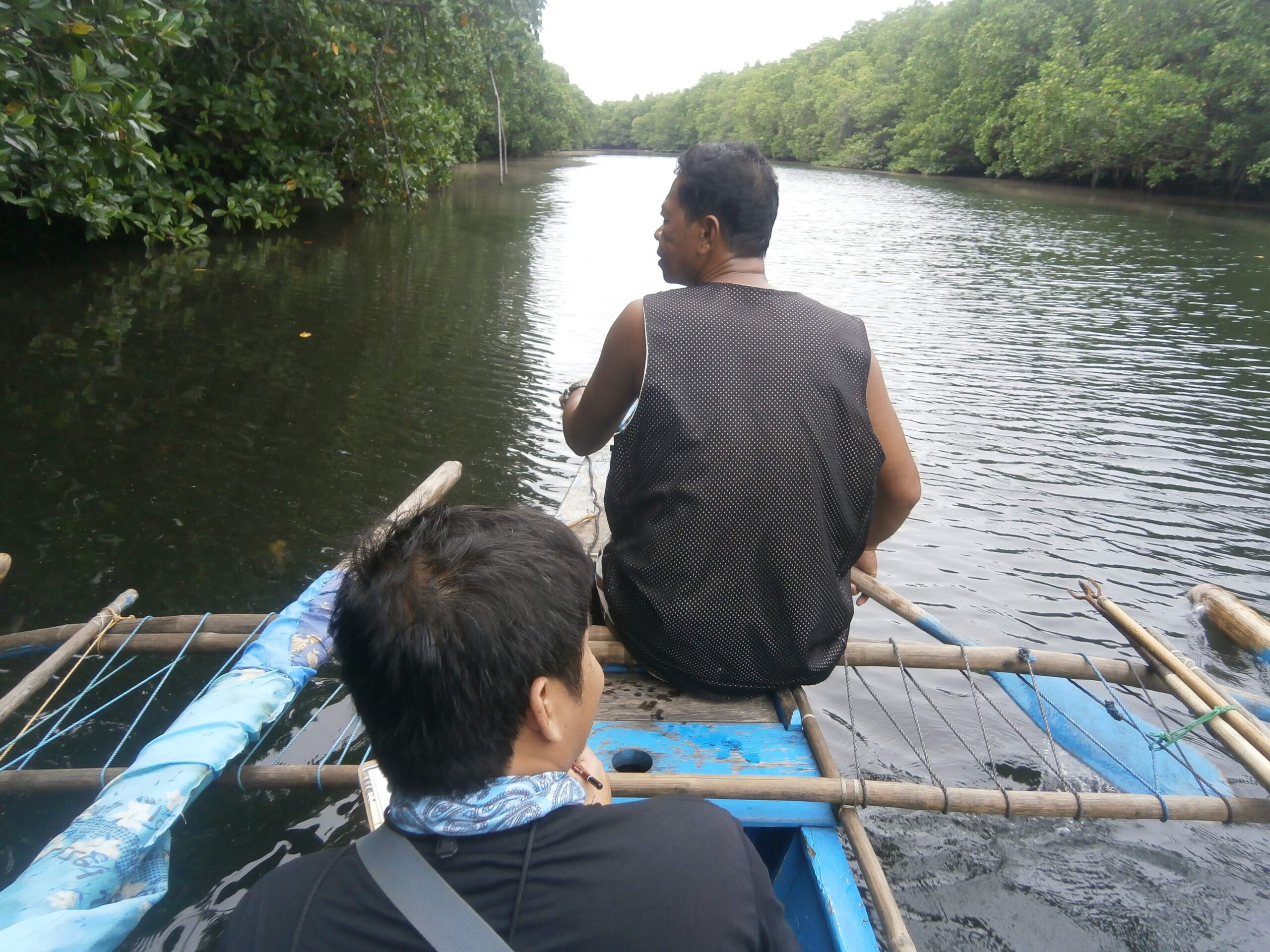
Field assessments were undertaken in both priority barangays, combining ground-truthing, stakeholder consultations, field photography and drone documentation where feasible.
Rapid ecological surveys documented 18 mangrove and associated coastal plant species across Rizal and Malcampo.
A community mangrove nursery was established in Rizal with capacity for approximately 8,000–10,000 seedlings, creating a practical foundation for future restoration activities.
Restoration planning prioritises the recovery of natural tidal processes and assisted natural regeneration, with planting undertaken where ecologically necessary.
Blue carbon assessment and investment readiness
Specialist technical and legal assessments examined the feasibility of developing a high-integrity blue carbon project.
The carbon advisory evaluated the proposed restoration activities against Verra’s VM0033 v2.1 tidal wetland restoration methodology and found the concept conditionally suitable in principle.
The assessments identified requirements relating to land tenure, hydrological conditions, baseline carbon accounting, additionality, monitoring and verification, environmental and social safeguards, and long-term financial sustainability.
Legal due diligence also identified tenure constraints affecting part of the proposed Malcampo restoration area. Physical restoration in the affected area was consequently deferred pending resolution of the relevant legal and regulatory requirements.
This evidence-led process helped establish clear criteria for deciding which areas could responsibly progress towards restoration and potential carbon finance.
Key Results
Approximately 2,000 hectares of severely degraded mangrove areas identified through province-wide feasibility screening.
More than 70 stakeholders engaged through the 2026 BCAP-supported programme.
Two formal community agreements established with Barangays Rizal and Malcampo.
18 mangrove and associated coastal plant species documented during ecological assessments.
8,000–10,000 seedling capacity established through a community mangrove nursery in Rizal.
Field verification and ecological baseline assessments completed in both priority barangays.
Specialist legal, tenure and carbon due-diligence assessments completed.
A staged framework established for future restoration planning, carbon monitoring, reporting and verification, and investment decisions.
Lasting Impact
The Palawan initiative demonstrates how community-centred conservation can be combined with rigorous ecological assessment and the development of credible conservation finance opportunities.
The original feasibility study established the scale of the restoration opportunity. The subsequent BCAP programme advanced this work by strengthening community partnerships, generating site-specific ecological evidence, establishing nursery capacity and identifying the legal and technical conditions necessary for responsible implementation.
An important outcome has been the development of an evidence-based investment pathway. Rather than relying on mapped hectares or speculative carbon credit estimates, the project requires individual restoration areas to demonstrate suitable tenure, hydrology, ecological conditions, safeguards and financial viability before implementation.
Future development will focus on resolving these requirements, strengthening carbon monitoring systems, completing restoration designs and exploring appropriate financing arrangements.
Through collaboration between C3 Philippines and C3 International, the project seeks to demonstrate a replicable approach in which ecological restoration, community benefits and sustainable investment can support one another.
Contact:
Work with C3 International
We welcome enquiries from governments, international organisations, NGOs, research institutions and private-sector partners seeking specialist expertise in marine and coastal environments.
Whether you are developing a new project, seeking technical advice or exploring opportunities for sustainable blue finance, we’d be pleased to discuss potential collaborations.
C3 International Limited is registered as a Limited Company in England and Wales, registration number 11233261